“Orangutans look straight into your soul“
Willy Smits
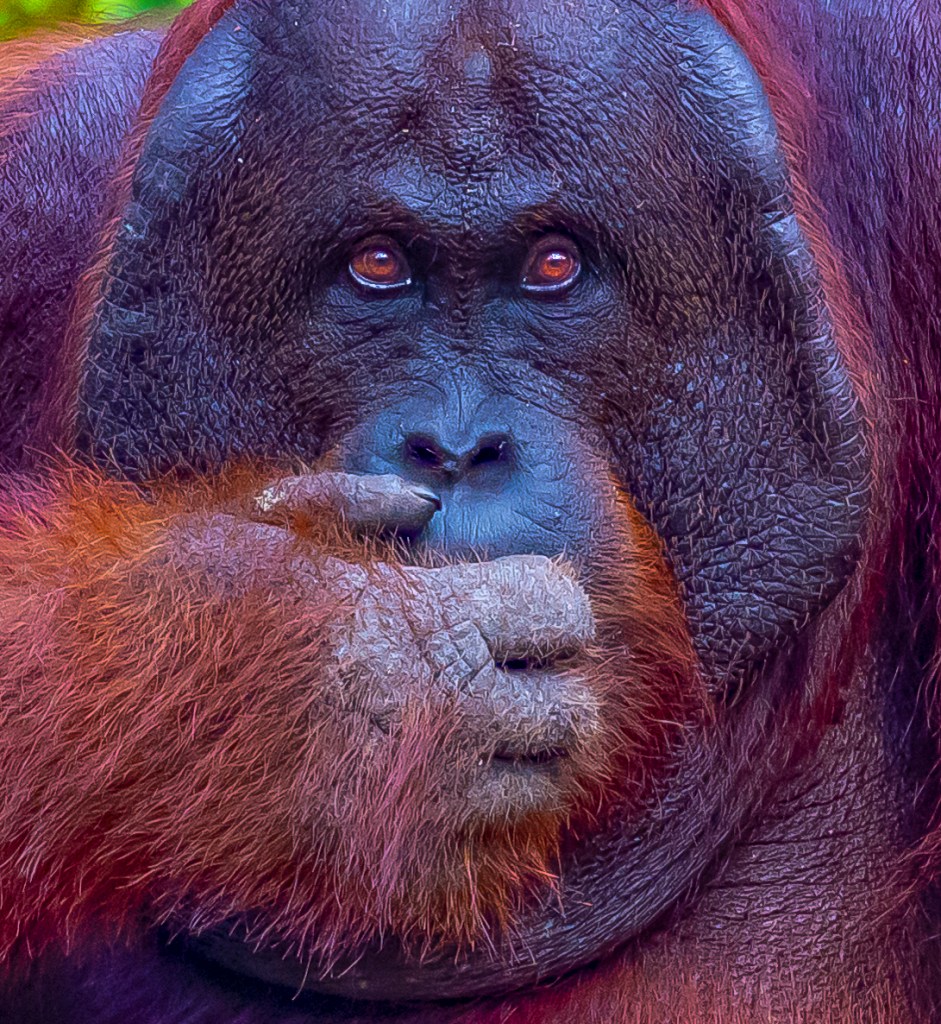
At some point in my life, I don’t know quite when, I became enamored with Orangutans. Maybe It was their blazing red color, or their human like face and expressions, or the fact that they shared 98% of my DNA, or maybe just the exotic idea of this animal roaming planet Earth somewhere in some unreachable patch of jungle unidentifiable to most of us.
Ever since I gained enough experience to credibly call myself a wildlife photographer, the notion that I needed to photograph these magnificent animals lingered until I could no longer resist its pull.
In October 2023, I journeyed to Indonesia to photograph Orangutans.
It turns out that Orangutans exist only on the Indonesian islands of Borneo and Sumatra with 85% of them on Borneo. Living on the east coast of the United States, I learned that Borneo is almost exactly 1/2 way around the planet from me and that traveling to Borneo would be a logistical and physical challenge. And it was…..40 hours after departing JFK airport, I landed in Pangkalan Bun, Borneo.
But once you see your first Orangutan in the wild, the trip is totally worth it.
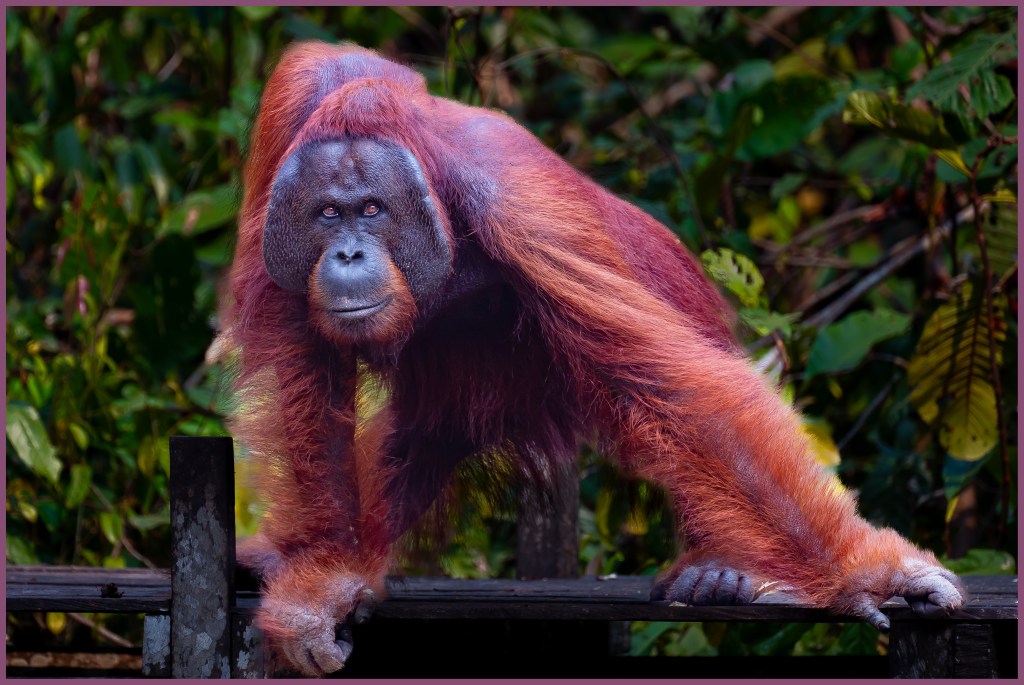
Early, in my first day in the jungle, I came across this young male, who my guide called Corona. It seems that Corona staked out his new territory around the time of the pandemic so the guides and rangers named him Corona and the moniker stuck.
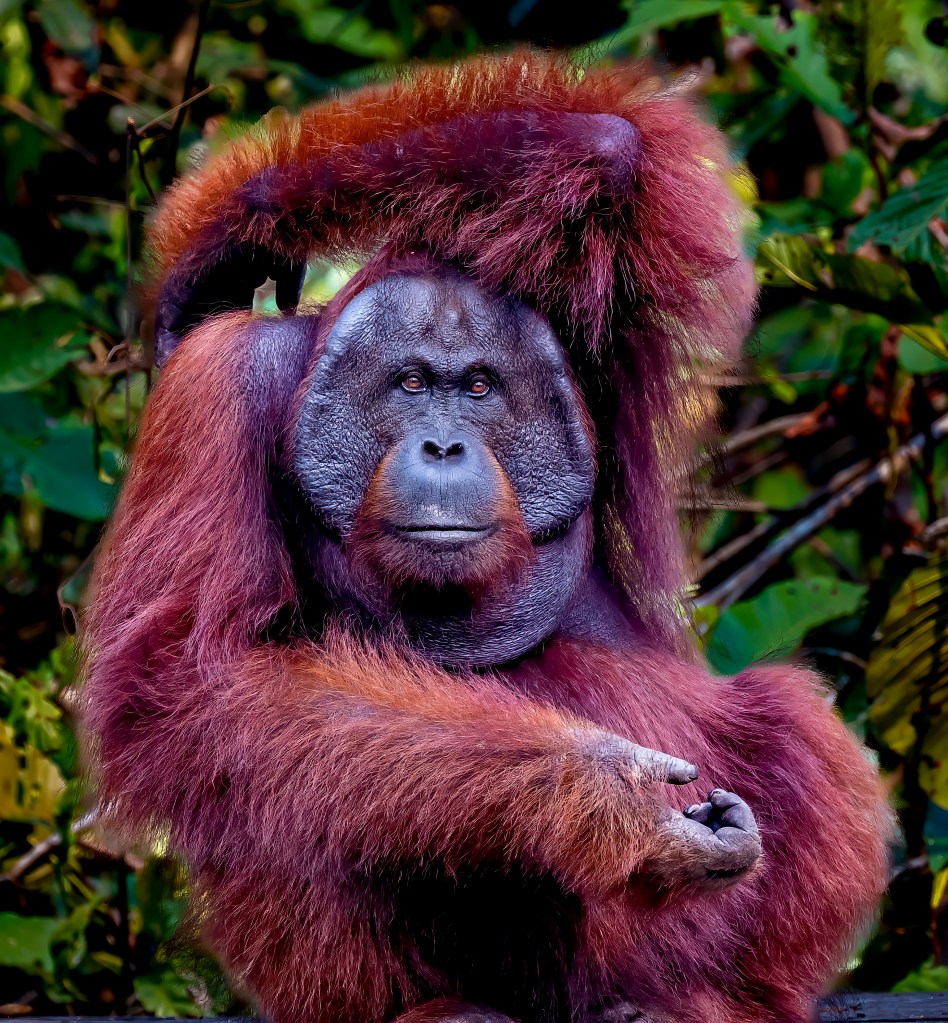
Male Orangutans live a solitary existence and will usually stake out a physical territory that it will defend against other males, particularly when fertile females are present.
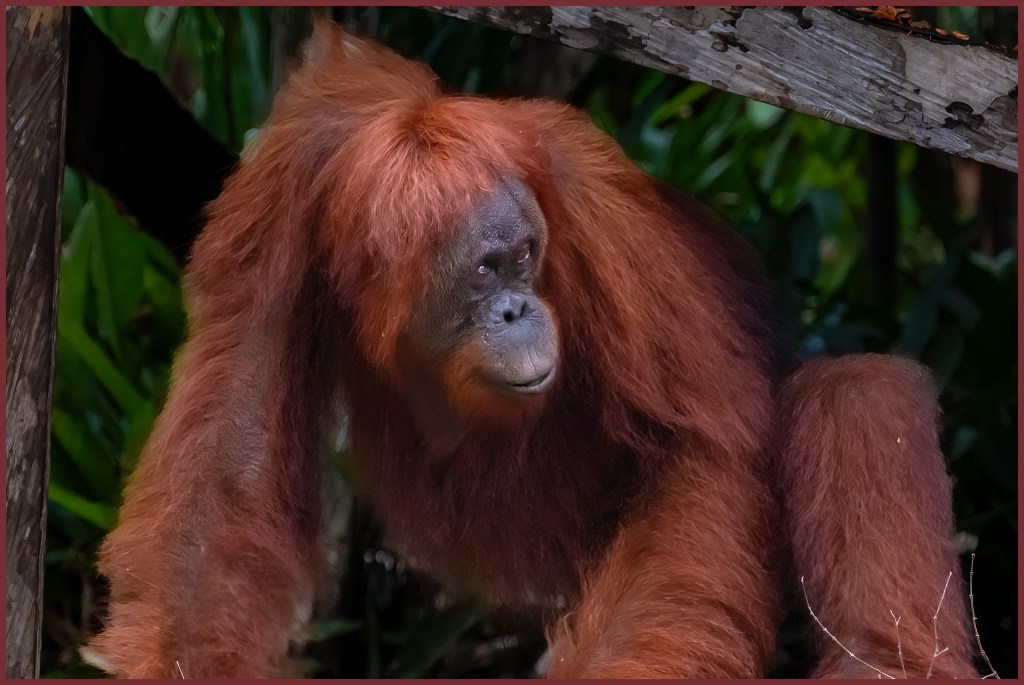
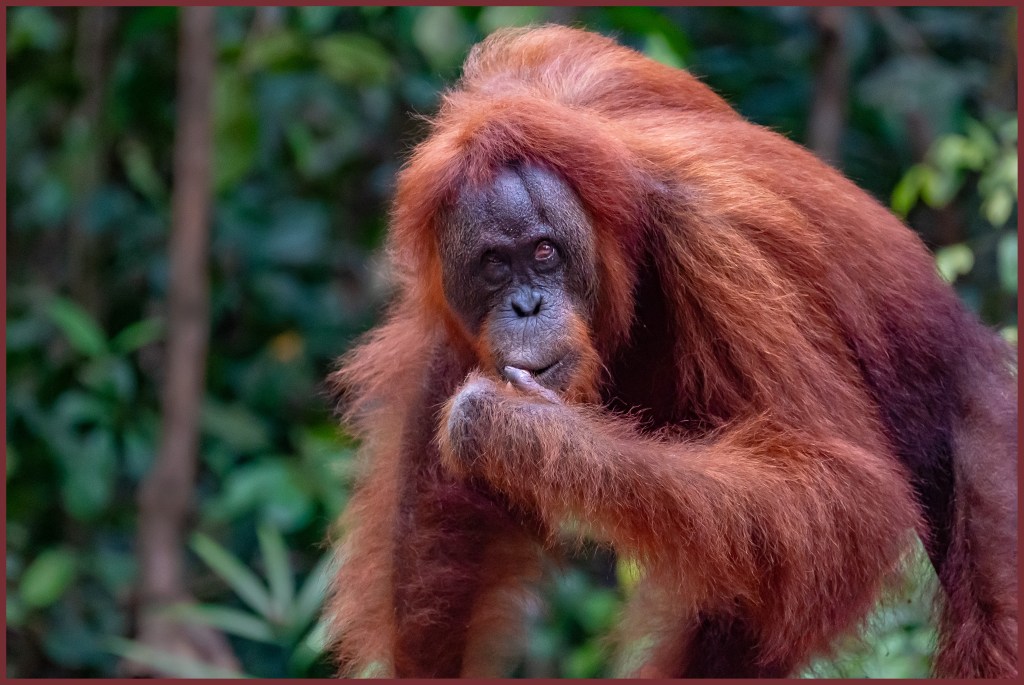
A defining characteristic of Orangutans is their beautiful red coat. Depending on the light, some coats can look almost purple.
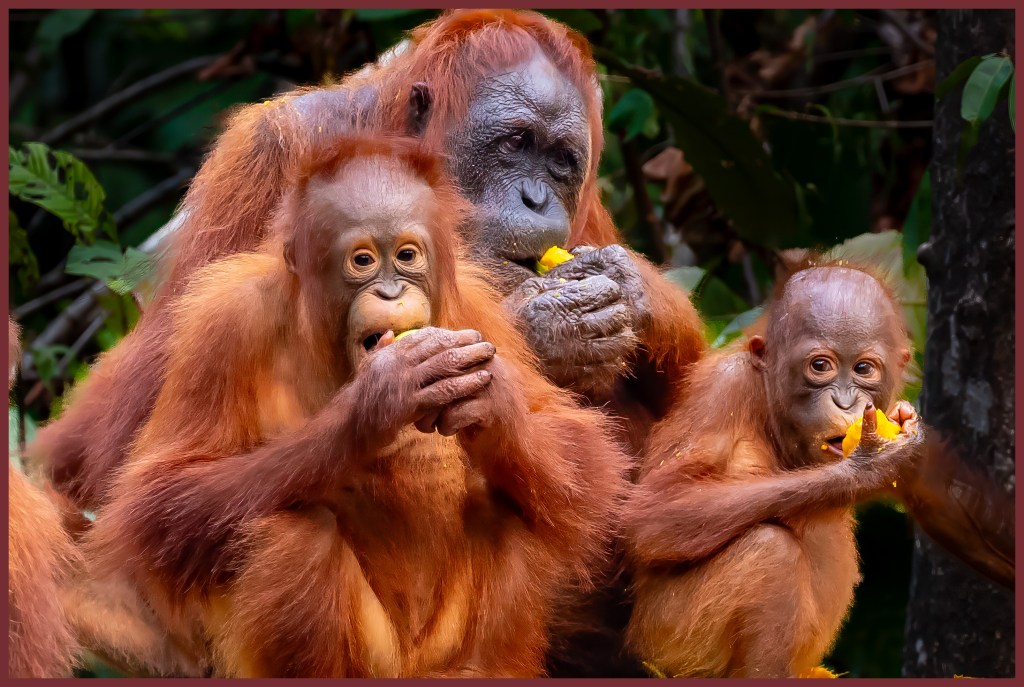
Females give birth every 7-8 years. For the first two years of a young orangutan’s life, he or she is completely dependent on mother for food and transportation. A baby orangutan clings to his/her mother’s stomach, side, or back while she moves through the trees, and feeds on his/her mother’s breast milk.
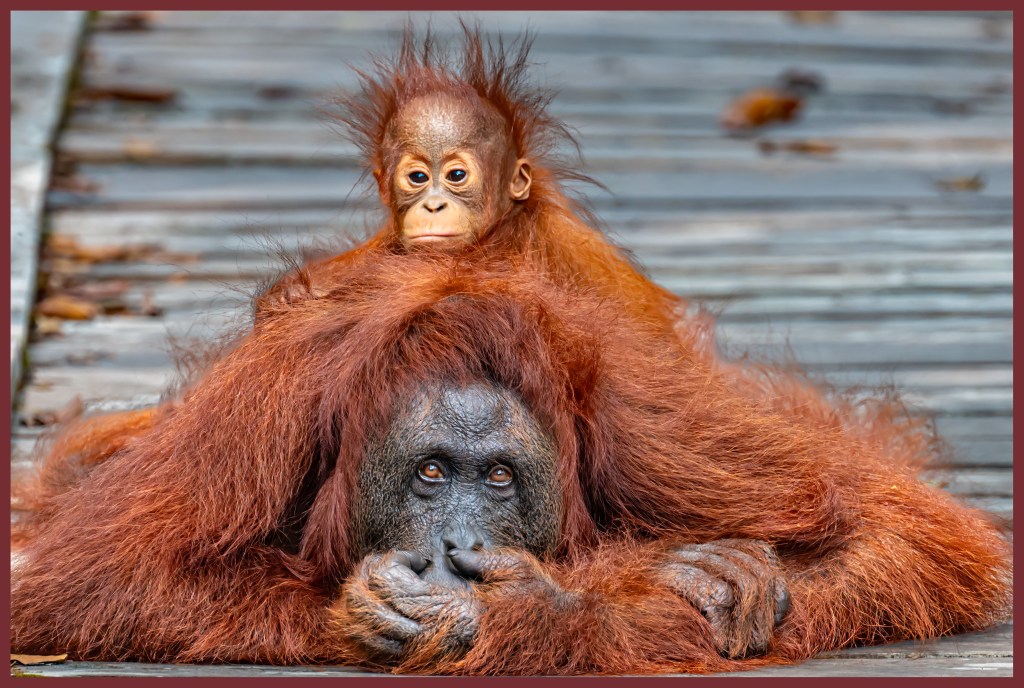
I came across this mother and child while walking on a jungle boardwalk. She was completely indifferent to me as I crawled towards her on my stomach to get a better image. I got to about 15 ft and waited for her baby to do something cute and then captured this image. She never moved a muscle!
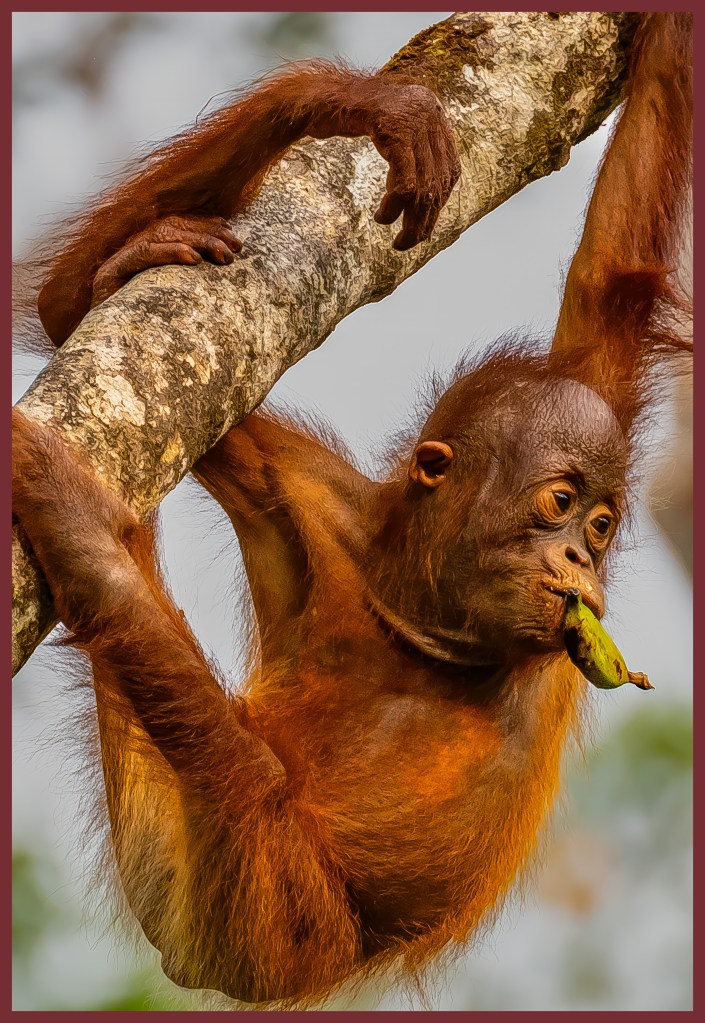
“”Orangutan offspring will sometimes be carried until they are 5 years old and be breast-fed until they are 8 years of age. Even when young orangutans are too old to be carried and fed by their mother, they may still remain close to her, traveling with her, eating, and resting in the same trees, until they are about 10 years old. Once they become independent, they will be alone or in the company of other immature orangutans. In the case of females, they frequently return to their mothers to “visit” until they are about 15-16 years old.” (Orangutan Foundation International)
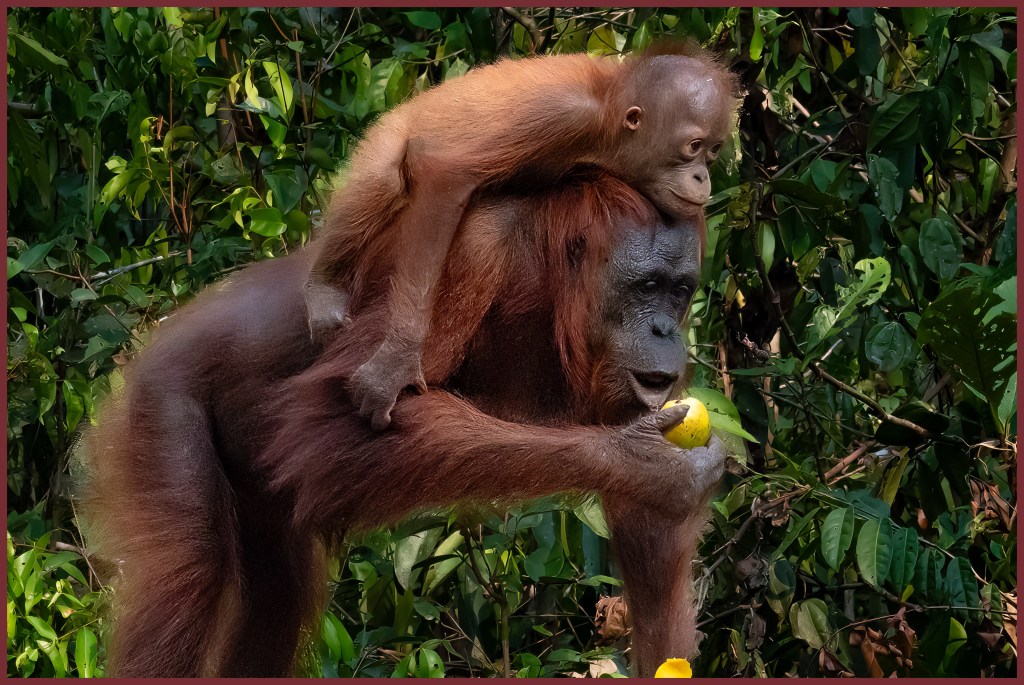
As shrinking of habitat, poaching, and tropical storms impacted the population, several rehabilitation camps opened, the most famous of which is Camp Leakey. The camp was founded in 1971 as a haven for orangutans rescued from domestic capture. Today the camp remains a center of research of these amazing animals. Each day there is a feeding for orangutans who have been rehabilitated in the camp and have been released into the wild. Rangers bring a sackful of fruit and vegetables onto a platform for rehabilitated and sometimes wild orangutans to have a meal. The feedings do not provide the daily food requirement for the animals but are a transition for the rehabilitated back into the wild.
Thank you for reading my blog post and feel free to offer any commentary on the bottom of the page. Also, if you enjoyed the post and want to view future blog posts from me please subscribe by entering your email and clicking on the “Subscribe” button below.
Frank Binder
https://www.frankbinderphotography.com


 Chasing the Light
Leave a reply to Elizabeth Portland Cancel reply